 The Villager Newspaper Online Your Community News – Cleveland's Westshore

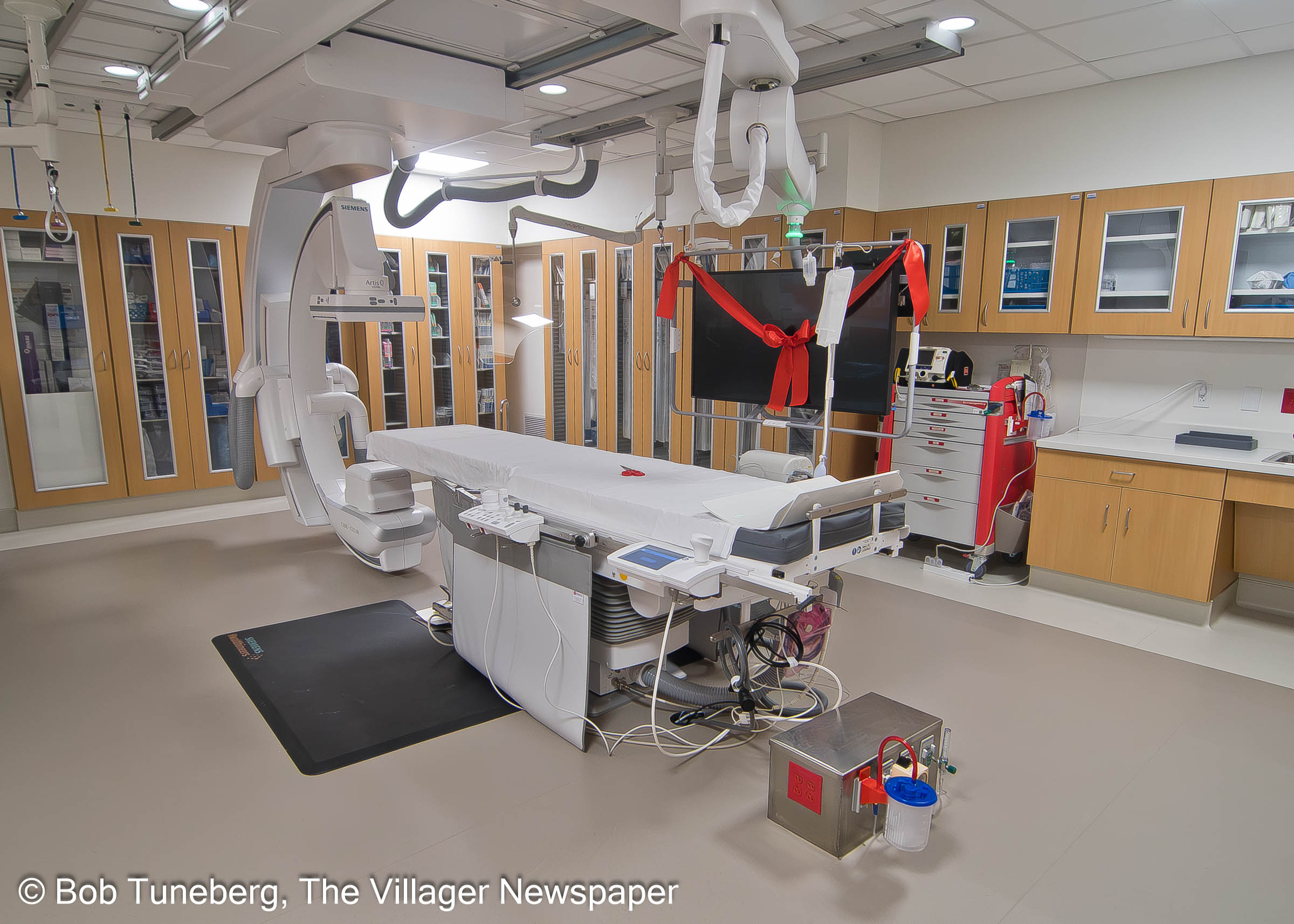 University Hospitals St. John Medical Center in Westlake recently completed a $2 million renovation of a cardiac catheterization lab, with upgraded technology in a brand new room that allows the team to perform more advanced onsite heart and vascular procedures.
Ryan Christofferson, MD, MBA, FACC, interventional cardiologist at University Hospitals Harrington Heart & Vascular Institute and director of interventional cardiology services at UH St. John Medical Center talked about the updated lab with The Villager.
How does the new cath lab benefit patients and the greater community?
“University Hospitals Harrington Heart & Vascular Institute at UH St. John Medical Center offers advanced technologies for screening and diagnosing heart and vascular disease, with the goal of catching conditions early and saving the lives of patients,” reports Dr. Christofferson. “Our patients find the same level of expertise and state-of-the-art equipment in their community hospital as they find at University Hospitals Cleveland Medical Center, in the convenience of a community hospital setting. Patients get the highest quality cardiovascular care where and when they need it most.”
Can you share your excitement about the recent opening?
“Anytime we can bring a new or enhanced service to our patients it’s a reason to celebrate. We take pride in offering our expertise in the communities where our patients live. When someone has a heart attack, we often say, time is muscle. Being able to stabilize a patient on-site without needing to transfer to a different hospital location saves lives.”
February is Heart Month. Any words of advice for readers about heart health?
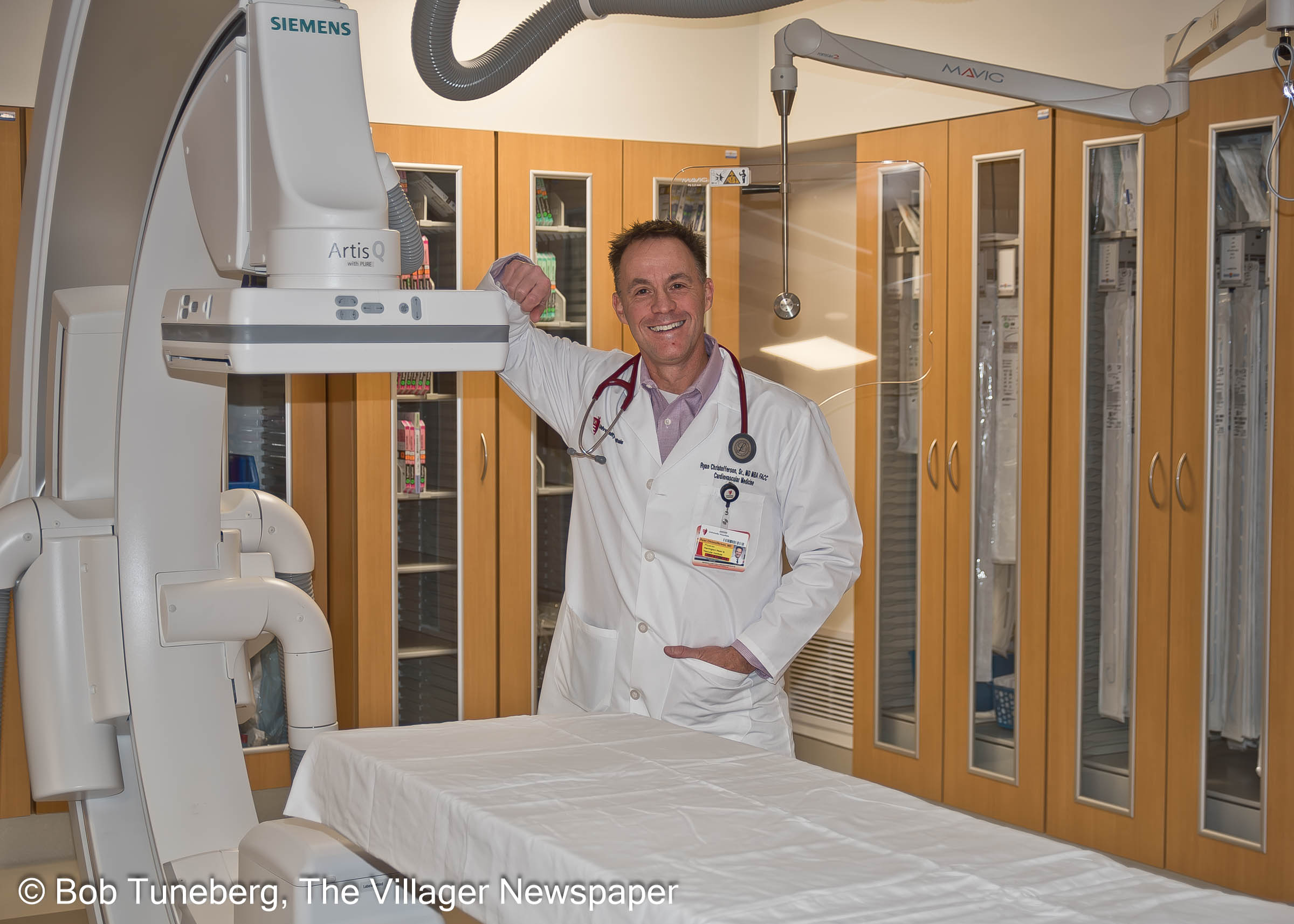
Ryan Christofferson, MD, MBA, FACC
“Heart disease is the leading cause of death for men, and women in the U.S. If you have risk factors or symptoms for coronary heart disease talk to your doctor for guidance. If you have new or worsening chest pain, or shortness of breath you should be evaluated.
“When it comes to heart attacks, women often have symptoms that can be easy to overlook like vague chest pressure, fatigue, a dull ache in the jaw, arms, back, or even indigestion.
“If you don’t feel like yourself, don’t hesitate to visit UH St. John, we’re here to help.”
What is cardiac catheterization?
According to UH, during cardiac catheterization (or cath), your healthcare provider puts a very small, flexible, hollow tube (catheter) into a blood vessel in the groin, arm, wrist, or in rare cases the neck. Then your provider threads it through the blood vessel into the aorta and into the heart. Once the catheter is in place, several tests may be done. Your provider can place the tip of the catheter into various parts of the heart to measure the pressures in the heart chambers. Or they can take blood samples to measure oxygen levels.
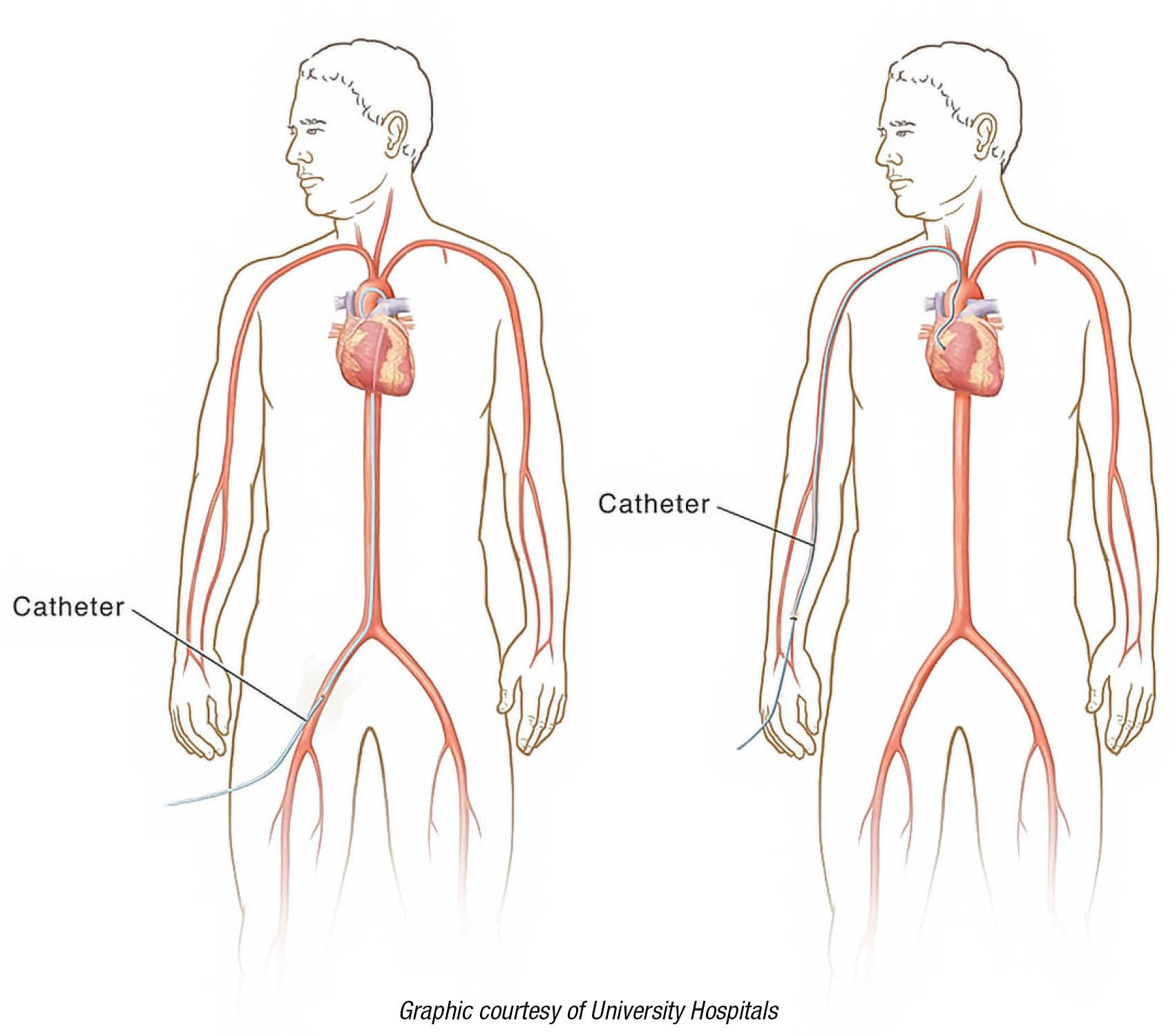
Your healthcare provider can guide the catheter into the coronary arteries and inject contrast dye to check blood flow through them. The coronary arteries are the vessels that carry blood to the heart muscle. This is called coronary angiography.
These are some of the other procedures that may be done during or after a cardiac cath:
- Angioplasty.
- Stent placement.
- Fractional flow reserve.
- Intravascular ultrasound (IVUS)
- Biopsy. Your provider may take out a small tissue sample and examine it under the microscope for abnormalities.
During the procedure, you will be awake. But a small amount of sedating medicine will be given before starting to help keep you comfortable.
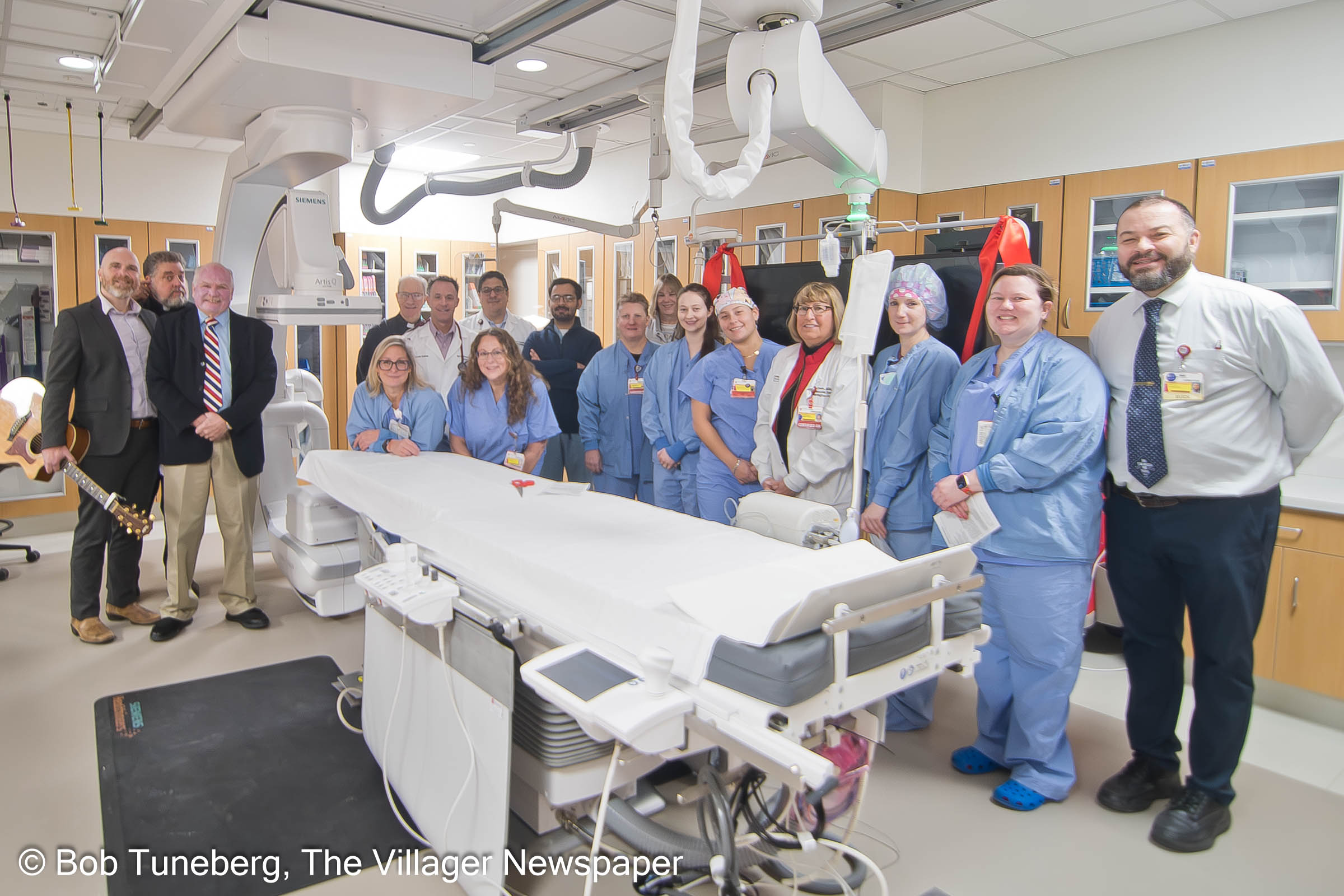
Members of the UH St. John Medical Center Cardiac Care Team with Mayor Clough
Why might I need cardiac catheterization?
Your healthcare provider may use cardiac cath to help diagnose these heart conditions: Atherosclerosis, Cardiomyopathy, Congenital heart disease, Heart failure, Heart valve disease, and Rejection after heart transplant.
You may have a cardiac cath if you have recently had 1 or more of these symptoms:
- Chest pain (angina)
- Shortness of breath
- Dizziness
- Extreme tiredness
If a screening exam, such as an electrocardiogram (ECG) or stress test, suggests there may be a heart condition that needs to be explored further, your healthcare provider may order a cardiac cath.
Another reason for a cath procedure is to evaluate blood flow to the heart muscle if chest pain occurs after the following:
- Heart attack
- Coronary artery bypass surgery
- Coronary angioplasty. This is opening a coronary artery using a balloon or other method.
- Placement of a stent. A stent is a tiny metal coil or tube placed inside an artery to keep the artery open.
To learn more about these procedures, visit UHhospitals.org/StJohnHeart.