 The Villager Newspaper Online Your Community News – Cleveland's Westshore


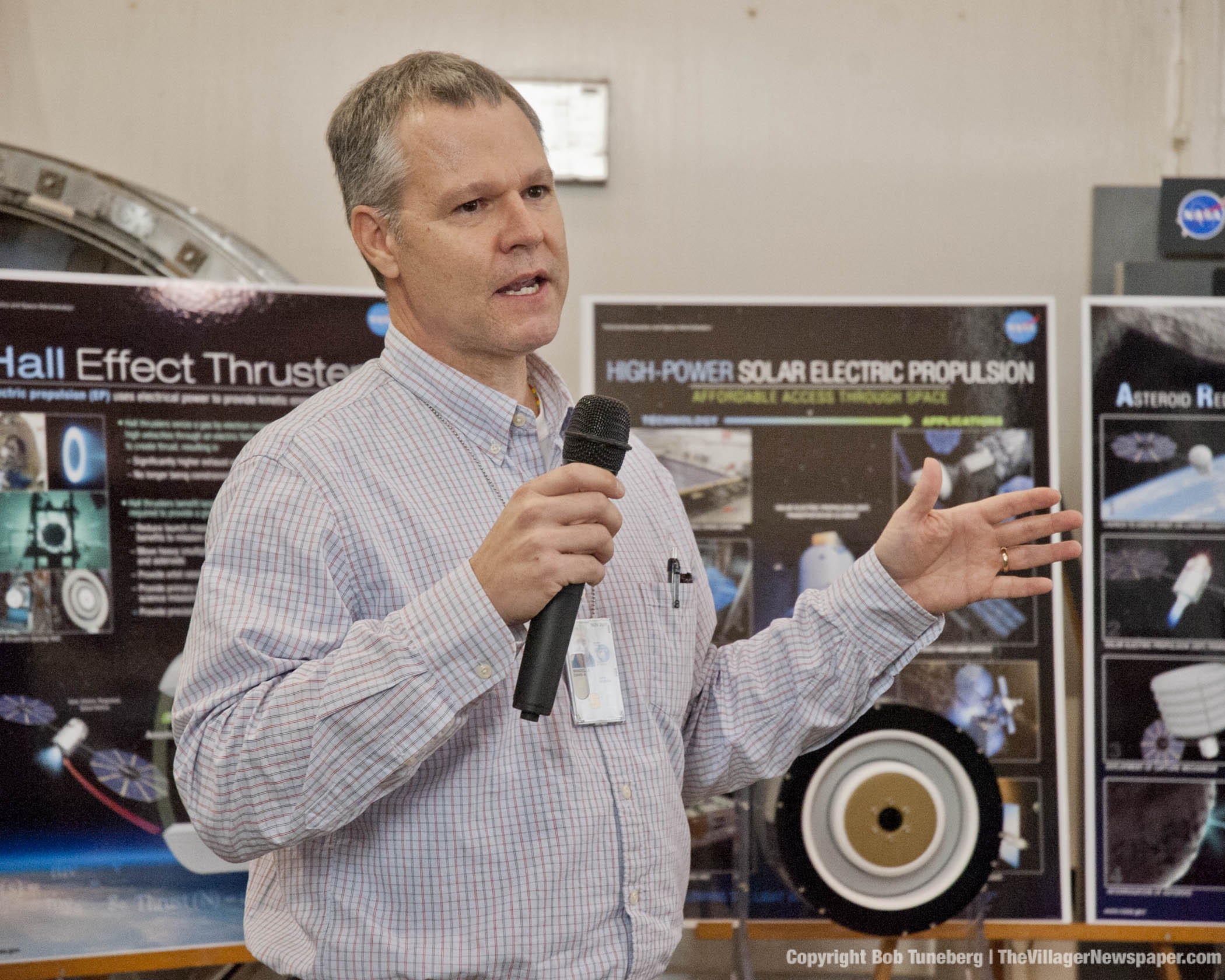
Research pilot Jim Demers welcomes visitors to the giant hangar at the John H. Glenn Research Center.
Nestled between Cleveland Hopkins International Airport and the Cleveland Metroparks Rocky River Reservation, NASA’s John H. Glenn Research Center at Lewis Field is a world-leader in the development of science and technology for use in aeronautics and space.
The Glenn Research Center returns more than $1.1 billion annually to the local economy, according to statistics compiled by Cleveland State University. (1)
Scientists there are busy on a daily basis, working on projects that not only expand mankind’s reach into the universe, but improve life here on earth. Exotic projects like extracting spacecraft energy from rays of light compliment everyday benefits like developing aircraft deicing technology to improve air travel safety.
NASA’s Glenn Research Center welcomed media and guests to a special Tech Tour conducted by Center Director Jim Free Monday, Feb. 2.

Vacuum chamber at the NASA Glenn Research Center for atmosphere free testing.
The tour coincided with NASA’s $18.5 billion budget request as rolled out in President Barack Obama’s 2016 Budget Proposal.
The tour gave a glimpse into this Cleveland institution that employees 3200 people and will celebrate its 75th birthday next year.
Monday’s tour covered four elements of campus research activities with direct real-world impact:
-Solar Electric Propulsion: NASA is coming up with ways to generate electricity from a single ray of light. Hall Effect Thrusters developed in its Electric Propulsion Laboratory are revolutionizing aeronautical propulsion. Engineer David Manzella explained how electron impact in a magnetic field can produce significantly higher thrust than chemical propellants. “It will be a key component in the way mankind reaches out to Mars and the asteroids,” said Manzella. “This will allow us to travel farther with much smaller, less costly engines,” added Free.
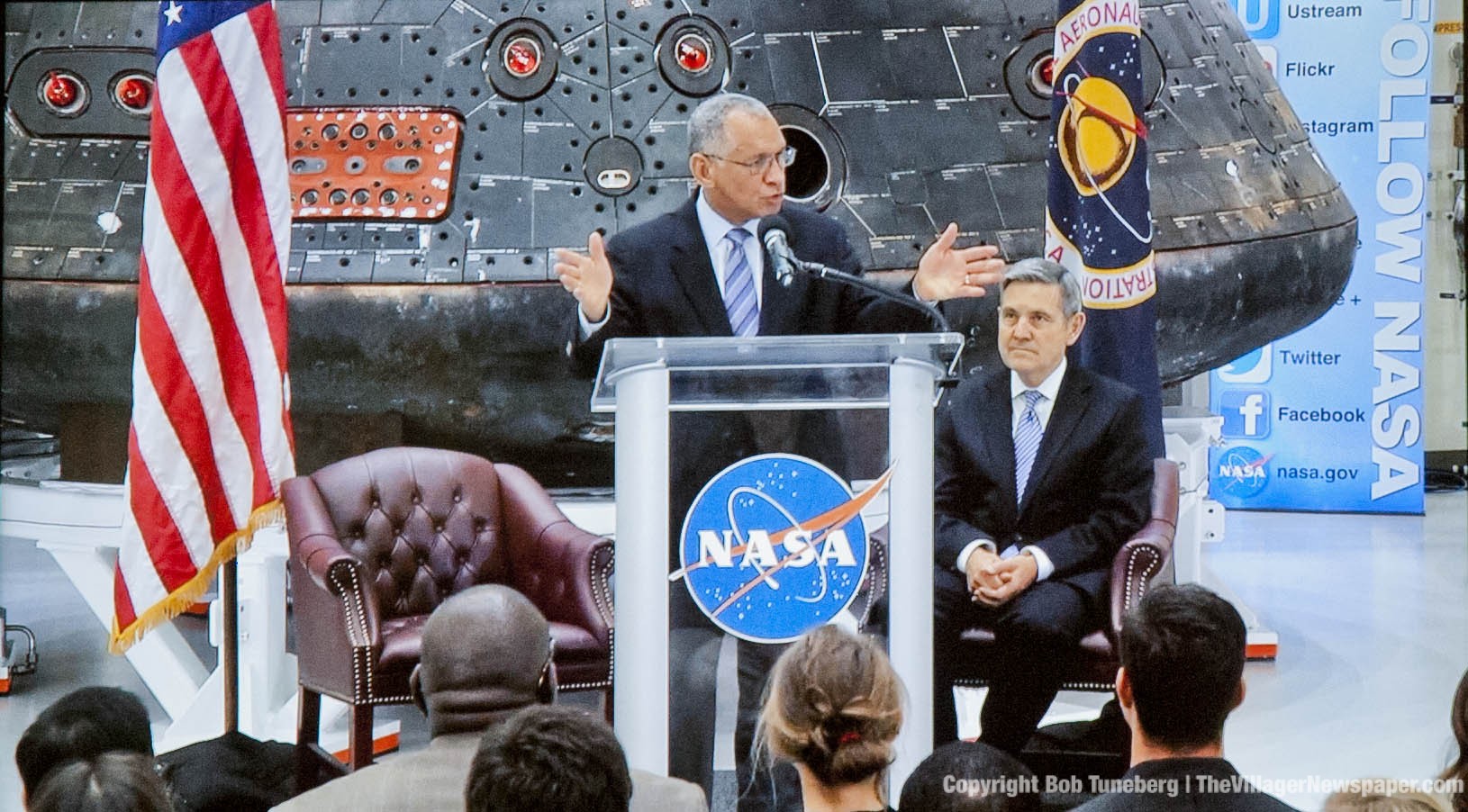
NASA Administrator Charles Bolden called out Glenn Research Center by name in his State of NASA address Monday, saying, “I want every single American to feel the pride that you and I feel when we talk about the work we do day in and day out.”
-Environmentally Responsible Aviation: Engineer Clayton Meyers explained how NASA research is able to reduce fuel consumption by 2.5 percent in cost-saving measures critical to the aviation industry. The program is part of a NASA-GE partnership. A banner in the lab states, “NASA is With You When You Fly.” “It is true,” said Free. “Many of the same components that are used in airlines everywhere have been tested here.”
-Algal Bloom Flights: Roger Tokars, John Lekki and Jim Demers explained how Airborne Hyperspectral Imaging flights are helping experts monitor and understand the harmful algae blooms that plagued western Lake Erie and other areas last summer. The algae makes it dangerous to drink Great Lakes water in some locations. The NASA team is developing an image sensing capability that will search for components of dangerous algae blooms in early stages that can be controlled.
NASA’s mission is to drive advances in science, technology, and exploration.
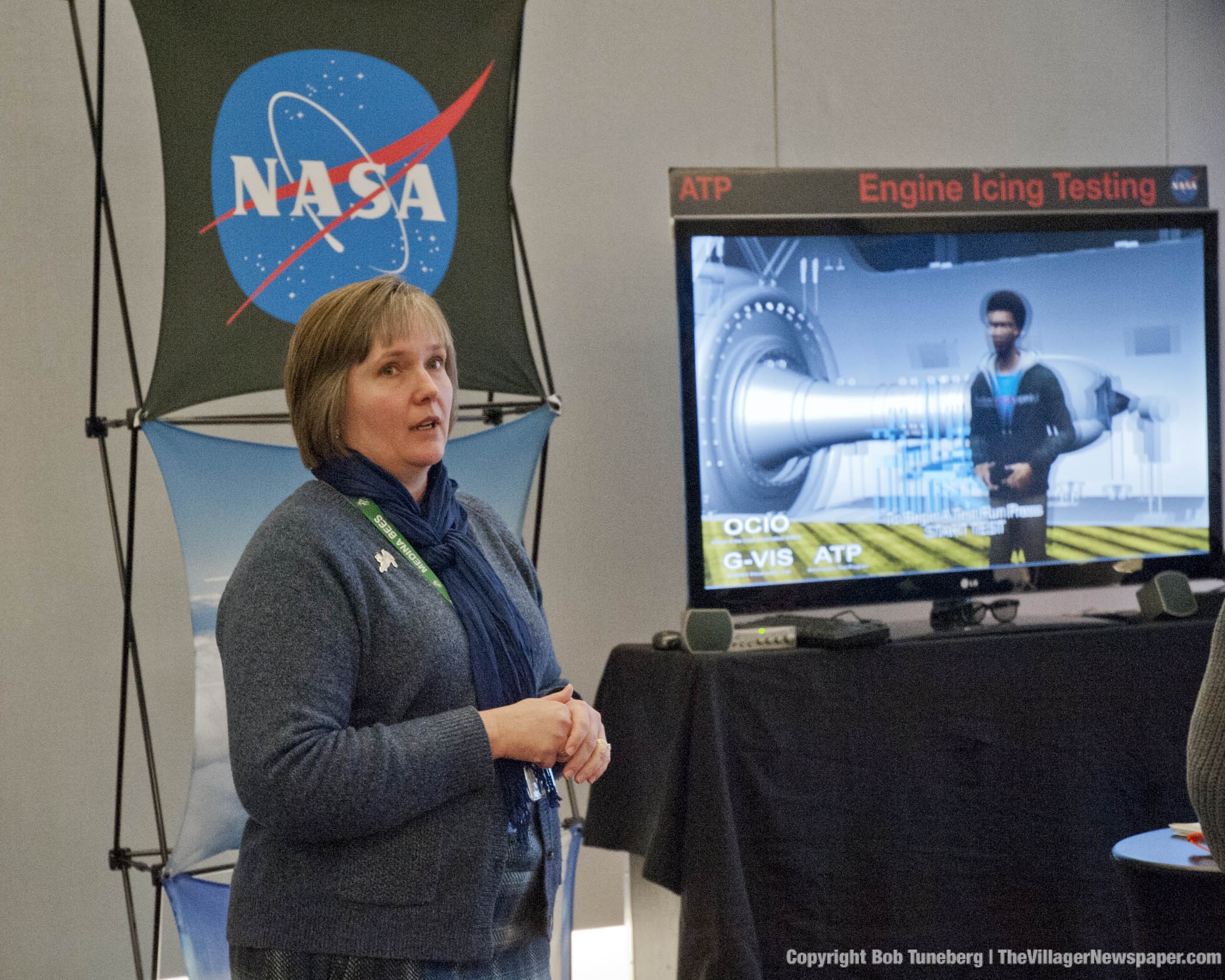
-3D Propulsion Systems Laboratory Icing Demonstration: Mary Wadel, Richard Rinehart and Paul Catalano demonstrated in 3D a Glenn facility for altitude, ice crystal jet engine testing. The 3D simulation allows potential customers and the public to see how the Propulsion Systems Laboratory, or PSL, simulates in-flight conditions to study the physics of ice crystal icing on modern turbo fan engines. Computer codes will be developed from this research to predict airplane engine susceptibility to operation in icing conditions. “Airlines from all over the world will be coming here,” said Free. “This will be the only laboratory of its kind in the world.”
The tour coincided with the ‘State of NASA’ televised address by Charles F. Bolden, Jr., NASA Administrator. Bolden reminded viewers that NASA research and development not only advances space capabilities, but also answers important scientific questions about Earth.
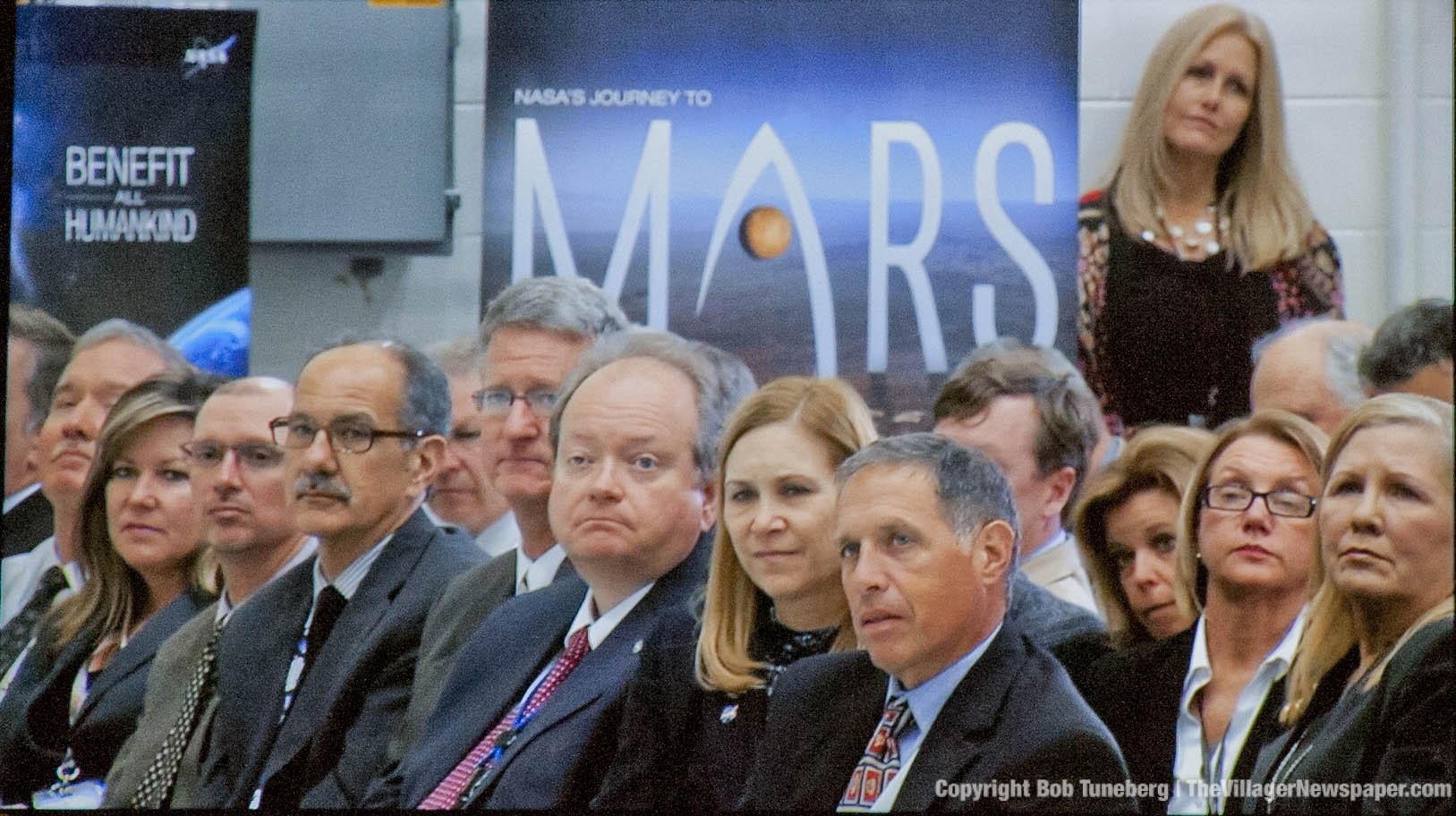
Missions to Mars and the Asteroids will be supported by testing done at Glenn Research Center in Cleveland.
“NASA is an incredible investment to our nation,” said Bolden as he called out Glenn Research Center by name. “Not only do we uncover new knowledge, it raises the bar of human achievement. People everywhere are attracted to what we do because exploration embodies our values as a nation.
“I want every single American to feel the pride that you and I feel when we talk about the work we do day in and day out and what we’re going to do in the years ahead.”
Click here for the full photo gallery: http://www.villagerphoto.com/People/NASA-Glenn-Research-Center/
(1) https://www.nasa.gov/sites/default/files/files/GRCEconomicImpactReport2014.pdf
-

- NASA Glenn Research Center Director Jim Free guided guests on a tour of select facilities to showcase the Center’s current and near-term contributions to the agency’s missions.

-

- Deputy Projects Manager Clayton Meyers discusses Environmentally Responsible Aviation. NASA research has developed important technology in support of fuel use reduction for the aviation industry.

-

- The hangar at Glenn Research Center, home to the research aircraft studying the growth of harmful algal blooms in the Great Lakes through airborne imaging.

-

- Chief Mary Wadel reports on The Icing Branch at NASA Glenn Research Center, where research activities are developing methods for evaluating and simulating the growth of ice on aircraft surfaces that will lead to safer air travel.
-

- Senior Propulsion Engineer Dr. David Manzella discusses In-Space Propulsion Technology Development at NASA Glenn. Work there will achieve efficient and reliable human space exploration through high-power solar electric propulsion.