 The Villager Newspaper Online Your Community News – Cleveland's Westshore


Dr. Thomas Gilson: “One of the biggest problems we have is in de-stigmatizing drug addiction. I do not think most addicts enjoy being addicts. Treatment works. People can recover from this if they get treatment.”
The Heroin Epidemic is real. Just last Friday, Westlake Police and Fire Squads responded to a drug overdose twice in 17 hours at a single Columbia Road address.
The victim was administered the heroin antidote Narcan both times and transported to St. John Medical Center. Details are inside today’s Villager Police Blotter (pg. 9)
The incidents would have come as no surprise to Cuyahoga County Medical Examiner Dr. Thomas Gilson. Dr. Gilson appeared at Cuyahoga County Councilman Dave Greenspan’s Town Hall meeting in Bay Village just a week earlier to speak about the heroin problem.
“How many people here have or know of a family member who has died from a heroin overdose?” asked Dr. Gilson at the start of the forum. His implication is clear: Heroin and its associate drug Fentanyl are alive and well and killing people in our communities.
How it Started
What started as a prescription drug problem in the 1990’s and 2000’s has became a heroin problem today. Opiates and pain meds were too-freely prescribed in the 90’s. They became a gateway to drug addiction when regulations on prescriptions tightened and some folks could no longer get or afford prescriptions for pain pills.
Addiction is Not New
Addiction to pain medicine goes back a long way. Morphine addiction was commonplace after the Civil War years as amputees and the seriously injured sought relief.
Heroin was later introduced as an answer to morphine addiction. Medical science viewed heroin as less addictive than morphine. It was used as a replacement drug for morphine and codeine early in the 20th century.
Dr. Gilson’s Story
Dr. Gilson has seen a lot, starting 20 years ago in New England. “It was at the end of the crack epidemic,” he says. “Not more than two days would go by and we’d see someone who had OD’d on crack.” He was working in New Hampshire at the time, and then served in New York City.
“In the 90’s, physicians started to prescribe more pain meds,” he says. When prescriptions ran out and not able to be refilled, addicts looked for answers. “Heroin acts on the same receptors as opioids. That is why they are used interchangeably by addicts,” says Dr. Gilson.
Coming from Afghanistan and Mexico, heroin is also cheaper than prescription medication. An addict may pay $80 for 80 mg. of Oxycontin and just $8 for an equivalent in heroin.
“The addict can get the same effect for 8 days with heroin at the price of one day for oxycontin,” says Dr. Gilson. “But if I buy a 40 to 80 mg. tablet of an opioid, I know what I am getting. If I am buying a bag of heroin on the street, who knows what I am getting?”
Heroin Deaths Soar
Heroin deaths have soared in Cuyahoga County. Of 353 county overdose deaths last year, 198 have been attributed to heroin.
One reason is because addicts who have been off the drug for a while (usually because of jail or rehab) go back to their former dose. It is too much for their bodies. They fall asleep and die because their bodies forget to breathe.
Dr. Gilson shares this story of one victim: “The family members said that he had gone to bed and he was snoring loudly. Then he stopped snoring. What they didn’t know is that is when he had died.”
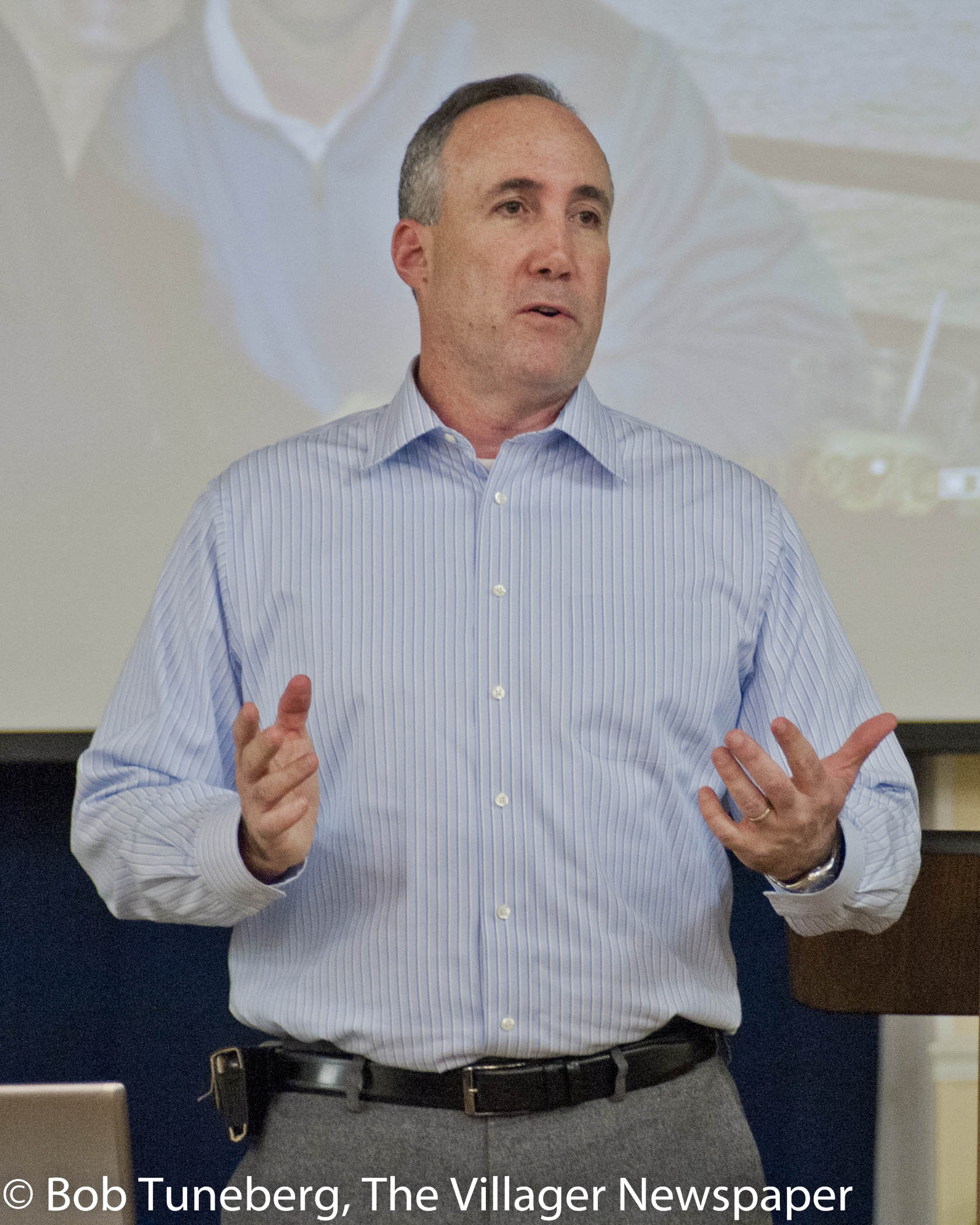
Cuyahoga County Councilman Dave Greenspan’s January Town Hall Meeting at Bay Village’s Dwyer Center focused on Heroin Addiction in our communities. In 2014, 198 heroin-related overdose deaths occurred in Cuyahoga County, a slight increase from 194 in 2013. However, Fentanyl overdose deaths have risen from 5 in 2013 to 39 in 2014.
Finding an Answer
“One of the biggest problems we have is in de-stigmatizing drug addiction,” says Gilson. “I do not think most addicts enjoy being addicts.
“Treatment works. People can recover from this is they get treatment.”
Treatment facilities and jails are the best intervention points for educational activities and messages, says Dr. Gilson.
His advice to addicts: Don’t relapse. If you do, don’t start at the dose you once used. “If you are going to use drugs, don’t use by yourself. Somebody has to be there to administer the Narcan if you overdose,” he says.
Naloxone (and Narcan) can bring the victim back immediately if administered soon enough – within a few minutes of expiration. There are no side effects, but the victim is immediately sober and in opioid withdrawal.
Naloxone
70 per cent of drug overdose deaths came in proximity to another person, but only 25 per cent received Naloxone last year.
The message: Wider access to Naloxone saves lives. In 2014, Naloxone was credited in 76 drug overdose reversals.
It’s Everywhere
“What we are seeing is the tip of iceberg,” says Dr. Gilson of the heroin epidemic. 85 per cent of the victims are white, average age 45-60. About half live in the suburbs and 31 per cent had a period of drug use abstinence prior to overdose.
Right behind heroin is the super drug Fentanyl, used for surgical applications. It is about 20 times stronger than heroin and users have been know to chew discarded patches if they can get their hands on them.
The Impact
Last year, more people died in Cuyahoga County from drug overdoses than motor vehicle accidents. More deaths were related to heroin than homicide. The Town Hall Meeting addressed the growing concerns of heroin addiction and how combined efforts within the community and nationally are helping to counteract this growing trend.