 The Villager Newspaper Online Your Community News – Cleveland's Westshore

Each storm season in Northeast Ohio brings a familiar mix of beauty, urgency, and anxiety. For many homeowners in Bay Village, increasingly intense winds and heavy rains — along with the lasting memory of the tornado that struck the region a few years ago — have changed how mature trees are viewed in the landscape.

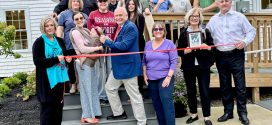
Bay Tree Conservancy members planting trees last weekend in Bay Village
 What were once seen as defining features of neighborhoods are now, for some, viewed primarily as risks. In response, a growing number of residents are choosing to remove mature canopy trees out of concern that limbs — or entire trees — could fail during storms.
The concern is understandable. Storms are stronger than they used to be, and the consequences of tree failure near a home can be significant. But experts caution that fear alone should not drive the decision to remove mature trees that are otherwise healthy and structurally sound.
“Most mature trees are far more resilient than people realize,” says Sean Fenton, a certified arborist with Bartlett Tree Experts. “In storm events, we typically see failure in trees that already have underlying structural issues — decay, poor branch unions, or long-term neglect — not in well-maintained, healthy canopy trees.”
That distinction matters. Trees, particularly mature hardwoods common in our region, are not fragile structures. They are living systems that adapt over decades to wind, soil conditions, and seasonal stress. A healthy tree develops strength through growth, not rigidity — allowing it to bend rather than break in many storm conditions.
Still, no tree is without risk. The key difference, arborists emphasize, is manageability.
“Tree risk is not something you eliminate by removal alone,” Fenton adds. “It’s something you manage through inspection, pruning, and long-term care. In many cases, proper maintenance significantly reduces risk while preserving the benefits the tree provides.”
Those benefits are substantial. Mature canopy trees provide shade that lowers cooling costs, improve stormwater absorption, reduce erosion, filter air, and enhance neighborhood character. Studies have consistently shown that well-maintained, mature trees and tree canopy can increase residential property values by up to 10–20% in many markets.
Despite this, removal is becoming a common response after severe weather events. The logic is straightforward: if a tree could fail, removing it feels like eliminating the risk entirely. But that approach can come with unintended consequences — both financial and environmental.
The cost of removal is not trivial. The average price to remove a mature oak tree can exceed $4,500 depending on size, location, and complexity. By contrast, routine professional maintenance — including pruning, risk assessment, and structural correction — typically ranges between $1,500 and $2,000.
“Preventative care is almost always more cost-effective than emergency removal,” says Fenton. “And more importantly, it preserves the long-term health of the urban forest.”
There is also a broader ecological consideration. Trees in developed neighborhoods do not exist in isolation. Their canopies, root systems, and wind interactions form part of a shared environment. Removing one mature tree can expose adjacent trees to increased wind stress and soil disruption, sometimes creating new vulnerabilities where none previously existed.
“Trees actually function as a system in many landscapes,” Fenton explains. “When you remove a mature tree, you change wind flow, soil conditions, and light exposure. That can unintentionally increase stress on the remaining trees.”
This interconnectedness is often overlooked in moments of heightened concern after storms. While immediate safety is always the priority — and hazardous trees should absolutely be addressed — the broader pattern of preemptive removal can gradually thin a community’s canopy in ways that are difficult to reverse.
 The Bay Village Tree Conservancy encourages residents to think in terms of stewardship rather than reaction. A healthy urban forest is not static; it requires ongoing care, periodic evaluation, and informed decision-making.
That includes recognizing that storm damage is not always a sign of failure in trees themselves, but sometimes a sign of environmental stress, age-related changes, or deferred maintenance.
As Fenton puts it: “A storm doesn’t necessarily reveal a bad tree — it often reveals a tree that needed attention earlier.”
For homeowners, the takeaway is not to ignore risk, but to approach it with context. A certified arborist can assess structural integrity, identify potential hazards, and recommend targeted interventions that preserve both safety and canopy value.
Ultimately, the question is not whether trees pose zero risk — they don’t — but whether that risk is being managed thoughtfully.
As storm season continues, it may be worth pausing before making irreversible decisions. Mature trees are among the most valuable living assets in our neighborhoods. With proper care, they are not just survivors of storms — they are designed for them.