 The Villager Newspaper Online Your Community News – Cleveland's Westshore

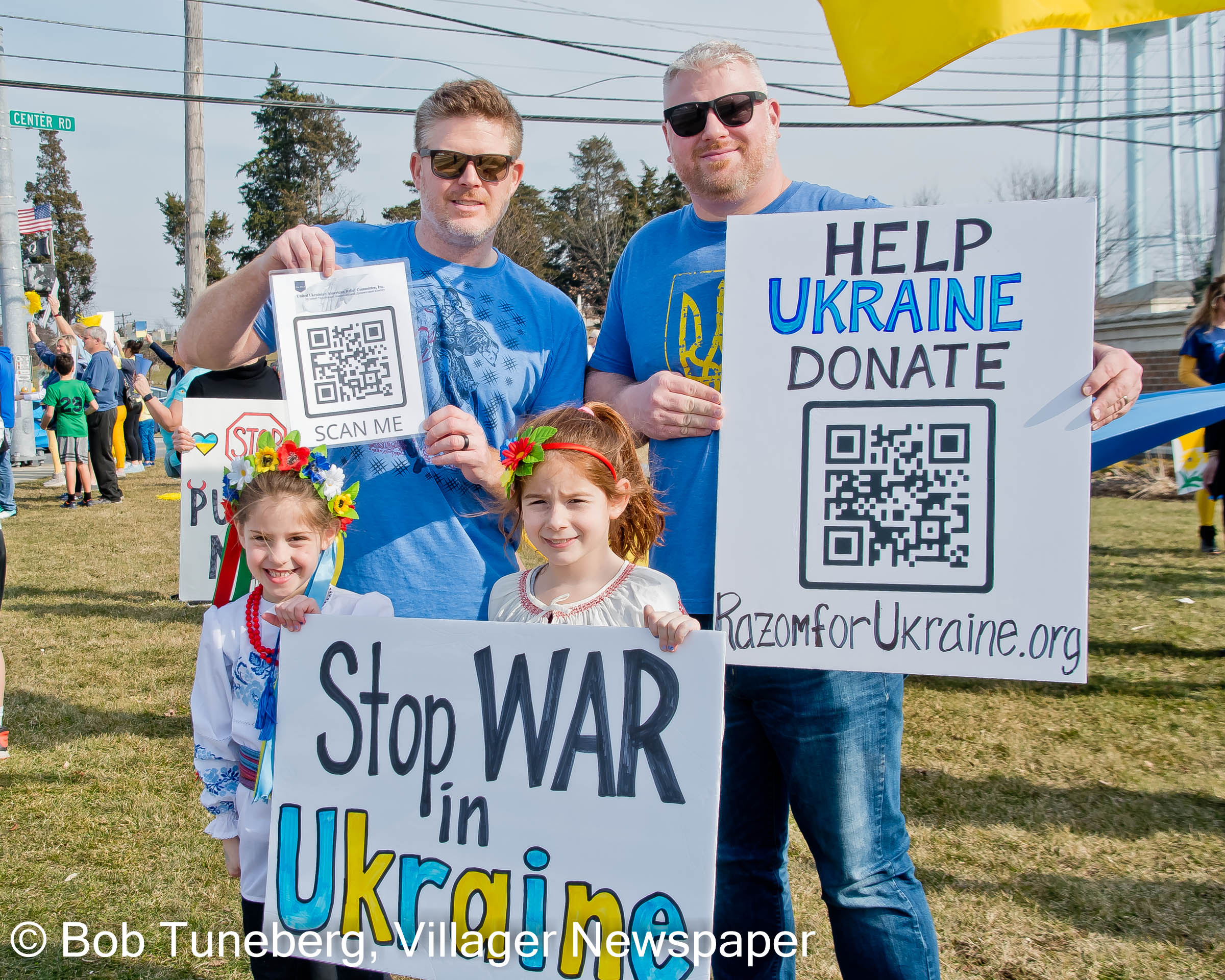
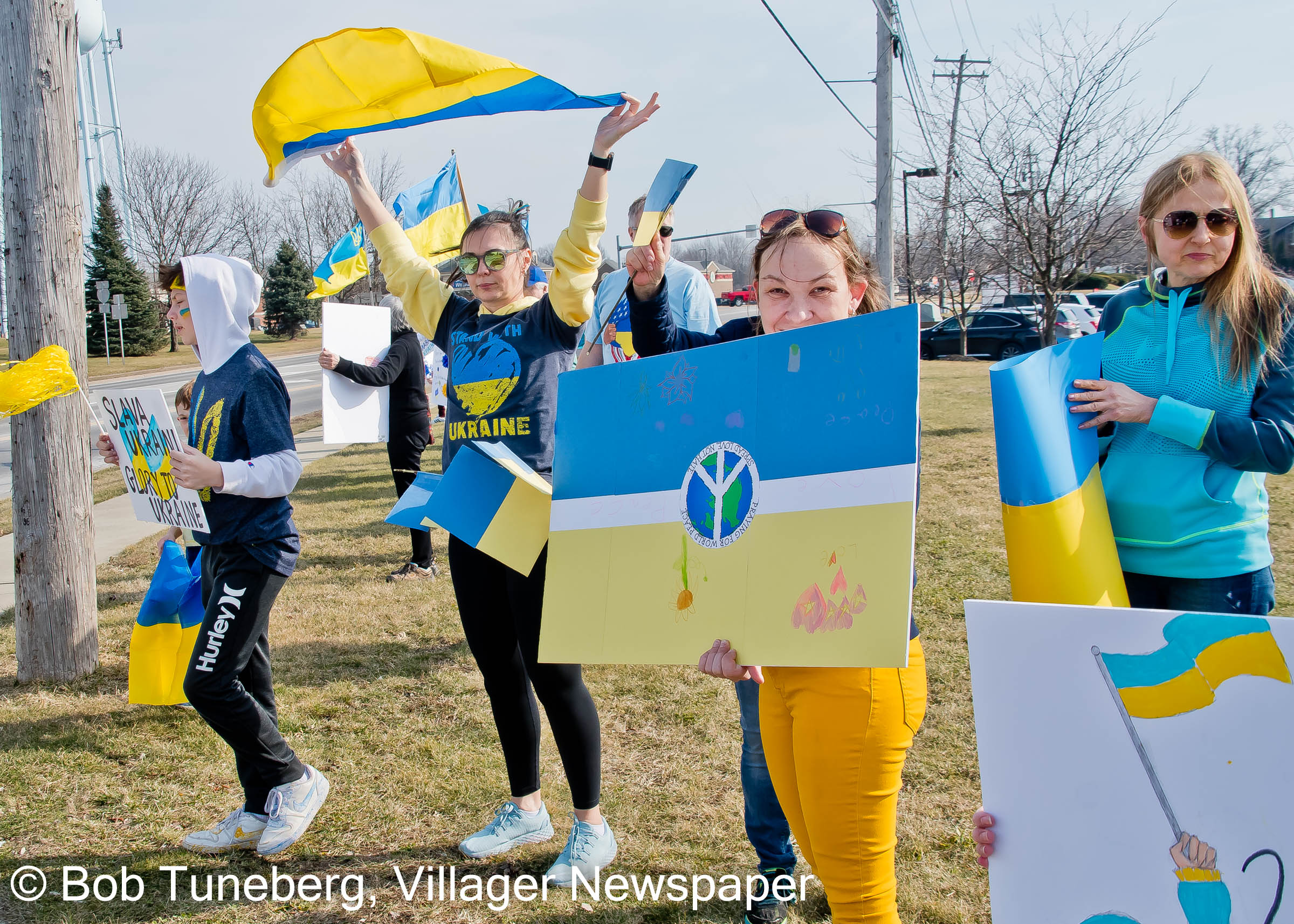
 A Stand with Ukraine peaceful rally was held on Saturday, March 5 on the corner of Rt. 83 and Detroit Rd. Rally goers brought flags and signs and wore blue and yellow in support of Ukraine.
As the attack on Ukraine from Russia is entering its third week, you can still donate to help the humanitarian crisis. To aid Ohioans looking to donate funds to help Ukrainian refugees, Governor Mike DeWine’s office released a list of organizations with positive reputations; however, the list is not inclusive. Those looking to donate should reach out directly to individual organizations. The Ohio Governor’s Office is not coordinating donations.



Governor DeWine Offers Tips and Resources to Help
Ohio Governor Mike DeWine today offered tips and resources to Ohioans looking to assist the humanitarian crisis occurring because of Vladimir Putin’s aggression against Ukraine.
“Seeing images of hundreds of thousands of Ukrainians fleeing their homes is heartbreaking; and many Ohioans are looking for ways to help,” said Governor DeWine. “Unfortunately, scammers are quick to exploit people’s generosity and goodwill. Just a few extra minutes of research can help ensure contributions will be used for their intended purpose. Ohioans stand with the people of Ukraine and all of the freedom-loving people of the world and condemn this invasion and the suffering it has caused.”
To aid Ohioans looking to donate funds to help Ukrainian refugees, a group of organizations with positive reputations are included below; however, the list is not inclusive. Those looking to donate should reach out directly to individual organizations. The Ohio Governor’s Office is not coordinating donations.
The listing of charities below is not an endorsement, and they are not affiliated in any way with the Ohio Governor’s office.
- Fund to Aid Ukraine: Established in 1990 the fund has helped provide medical supplies to Ukraine, support refugees, assist orphanages, and help victims of Chernobyl. www.fundforukraine.org/
- Direct Relief: Direct Relief works in the U.S. and internationally to equip doctors and nurses with life-saving medical resources to care for the world’s most vulnerable people. www.directrelief.org/
- Mercy Corps: This organization is assessing humanitarian needs in Ukraine and the region. They anticipate providing emergency cash assistance and supporting local organizations. www.mercycorps.org/
- International Medical Corps: The group is expanding its relief efforts in Ukraine and in neighboring countries, to provide medical, mental health and protection services to the millions of people affected by the conflict, including refugees. internationalmedicalcorps.org/
- Save the Children: Donations to Save the Children can help provide children and families with immediate aid, such as food, water, hygiene kits, psychosocial support, and cash assistance. www.savethechildren.org/
- Ukrainian Red Cross (redcross.org.ua/donate/), International Committee for the Red Cross, and the International Federation of Red Cross and Red Crescent Societies (www.ifrc.org/emergency/ukraine-and-impacted-countries): These Red Cross organizations are working together to relieve the humanitarian crisis in Ukraine and neighboring countries where refugees are fleeing.
Other Organizations
The Villager Newspaper has assembled a list of charitable organizations supporting Ukrainians in need.
- World Central Kitchen (wck.org/relief/activation-chefs-for-ukraine) – Founded by world-renowned chef José Andrés after an earthquake devastated Haiti in 2010, the group provides meals to people in need around the globe. Andrés is now feeding Ukrainian refugees at the Polish border. WCK is first to the frontlines, providing meals in response to humanitarian, climate and community crises. We build resilient food systems with locally led solutions. Working at a 24-hour pedestrian border crossing in southern Poland, WCK began serving hot, nourishing meals within hours of the initial invasion and are now set up at eight border crossings across the country. Additionally, we are supporting local restaurants preparing meals in eight Ukrainian cities including in Odessa, Lviv, and Kyiv. WCK teams are also on the ground in Romania, Moldova, Hungary, and arriving soon to Slovakia to see how we can best support.
- Razom for Ukraine (razomforukraine.org/razom-emergency-response) – Razom was born out of the Revolution of Dignity in 2014 when millions of people worked together and risked their lives to build a pathway to a better future for Ukraine. Today, the sovereign nation of Ukraine has to deal with the most horrendous and catastrophic emergency – a brutal invasion. Razom is responding to this by providing critical medical supplies and amplifying the voices of Ukrainians. The current emergency response is focused on purchasing medical supplies for critical situations like blood loss and other tactical medical items. We have a large procurement team of volunteers that tracks down and purchases supplies and a logistics team that then gets them to Ukraine.
- Nova Ukraine (novaukraine.org) – Nova Ukraine is a 501(c)3 registered non-profit organization dedicated to raising awareness about Ukraine in the US and throughout the world and providing humanitarian aid to Ukraine. We work closely with nonprofits and volunteers focused on helping Ukraine.
- United Help Ukraine (unitedhelpukraine.org/about-us) – United Help Ukraine is a 501(c)3 whose activities focus on fundraising events and raising awareness about the war in Ukraine by engaging individuals, organizations, private and government institutions and media in the United States of America. We are receiving and distributing donations, food and medical supplies to the Ukrainian refugees, people of Ukraine affected by the ongoing war in Ukraine, families of wounded and killed for freedom and independence in Ukraine.
- Global Giving-Ukraine Crisis Relief Fund (www.globalgiving.org/projects/ukraine-crisis-relief-fund) – Russia has invaded Ukraine in the biggest state-against-state attack since World War II. Millions of civilians are caught in the middle of an escalating military conflict and humanitarian crisis, and casualties are rising. Your donation to this fund will support Ukrainians in need, with a focus on the most vulnerable, including children.
- UNICEF (www.unicefusa.org/HelpUkraine) – UNICEF mainly supports children and families caught in conflict in Ukraine. The agency provides educational support, psychosocial support, emergency supplies as well as access to safe water. The organization announced it has scaled up its programs following the invasion. Catherine Russell, UNICEF executive director, said the intensifying violence in Ukraine posed immediate threats to the lives and wellbeing of the country’s 7.5 million children.
- Doctors Without Borders (www.doctorswithoutborders.org) – Doctors Without Borders, which works in conflict zones, is partnering with volunteers in Ukraine to help people travel to health-care facilities and working to ensure that people have access to health care and medicine
- Care (www.care.org) – Care, the international humanitarian juggernaut, and a pop-up window appears. “UKRAINE EMERGENCY,” the alert says, with a photo of a woman holding a child. “Families in Ukraine are fleeing violence and urgently need emergency aid. CARE is providing food, water, and more,” the homepage says. The group has partnered with People in Need and hopes to build a fund that can reach 4 million people, especially women, girls and the elderly. Donations for Care can be made here.
Ed. Note: The Villager staff have researched these sites to the best of our abilities. Please be diligent and do your own research before donating to make sure your donation is going to the people in need.
Before Donating to Help the Humanitarian Crisis in Europe, Ohioans Urged to do Research
To help ensure donations are used as intended, donors should check requests before contributing. For example:
- Don’t rely on a group’s name alone. Many sham charities have real-sounding names.
- Don’t assume a charity recommendation you find online has been vetted, even if it’s posted by someone you know. Check it out yourself.
- Research charities using the Ohio Attorney General’s Office and other resources (charitableregistration.ohioattorneygeneral.gov/Charities/Research-Charities.aspx).
- Check an organization’s IRS Form 990, which is typically available on GuideStar (www.guidestar.org/), to find program descriptions, expenses, and other details.
- Determine how you can best help. For example, a charity may prefer monetary donations rather than donated goods. Similarly, if you want to set up a fundraiser for a specific group, contact the organization in advance to determine how you can properly collect donations.
- Be aware that some calls come from for-profit companies that are paid to collect donations. If you ask, these professional solicitors must tell you how much of your donation will go to the charity. They also are required to identify themselves.
When evaluating crowdfunding or online fundraising campaigns set up to help those impacted by the conflict, keep additional considerations in mind. For example:
- Determine which campaigns are supported by those close to the tragedy and which haven’t been vetted. In some cases, the person who sets up an online fundraiser may not have permission to do so or may not use the funds as promised.
- Find out how your money will be used. For example, will it be used for a specific person or family, or will it be used for the greater community? Keep in mind that that giving money to an individual is different from donating to a charity. Your donation may not be tax deductible. Also determine whether you will be charged any fees for making the donation and what percentage of your donation will go to the cause itself.
- Determine what the website will do (if anything) with your personal information. Be wary of websites that do not provide a privacy policy. Also, make sure the site is secure before entering your payment information or other sensitive details. Look for the “https” in the web address; the “s” indicates that it’s secure.
Signs of a potential charity scam include:
- High-pressure tactics.
- No details about how contributions will be used.
- No written information about the charity, its mission, or how it operates.
- Requests for payment to an individual, rather than an organization.
- Someone who offers to pick up donations immediately.
- Requests for donations via cash or gift card.
- Callers who ask for donations but don’t identify themselves and won’t provide written information about the cause.